Executive Functioning Coaching and Home Education in Bristol
Many people quietly ask themselves, or wonder about their child:
“Am I struggling to start and follow through because I lack ability, or because I haven’t had the right support, opportunities, or conditions to develop and use my abilities?”
This question matters.
Often, the issue is not a lack of intelligence, potential, or knowledge. The difficulty may be accessing and using abilities that are already there.
But sometimes the foundations underneath a skill are still developing. A person may have encountered information, understood something before, or even demonstrated a skill, but not yet have reliable ways to hold, organise, retrieve, and use that knowledge.
This can make ordinary tasks require much more mental effort than might be otherwise expected.
When the Brain Is Carrying Too Much
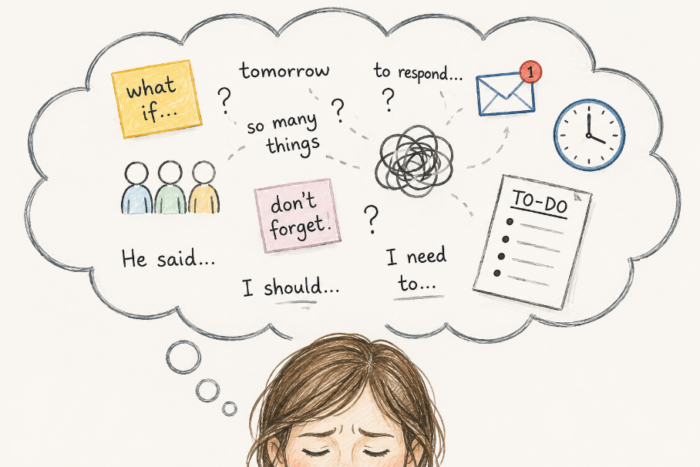
For some people, even one unresolved thought, conversation, decision, or problem can occupy hours or days of mental space.
For others, the task itself may be demanding because the underlying foundations are fragile. These foundations could include holding information in mind, organising it, visualising what needs to happen, remembering a sequence, or knowing where to begin.
In both cases, the result can be similar:
too much cognitive demand leads to overload which results in reduced access to executive functioning
When the brain feels overloaded, it may begin to prioritise protection, immediate relief, and predictability. It may:
- focus on what feels urgent or easier to “close”
- avoid open-ended or demanding tasks
- seek safety, predictability, or certainty
- become preoccupied with unresolved thoughts or difficulties
This can make the individual’s abilities appear inconsistent.
For the person experiencing it, things may feel:
- “sometimes there, sometimes not”
- frustratingly out of reach
- difficult to start, despite knowing what to do
- much harder when tired or uncertain
This is one reason why a person can know something, understand something, or have successfully done something before but still struggle to access all of that in a different moment.
It may be that the person doesn’t have enough capacity to hold, retrieve, organise, or use it at that time, rather than the knowledge or skill having disappeared.
The Cycle
When a person is struggling in these areas, it can lead to them getting stuck in a cycle which causes further challenges.
Sometimes, emotional stress, unresolved thoughts, or a lack of felt safety may be the starting point for this cycle. It could look like this:
Difficult task / fragile foundation

Increased cognitive demand

Cognitive overload

Reduced access to skills & executive functioning

Inconsistent performance & further effort

Further overload
Often, several factors interact.
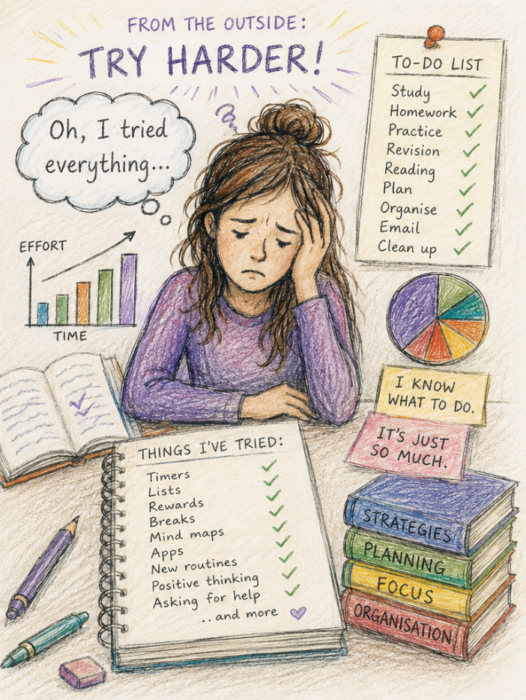
This is why simply telling someone to “try harder,” “pay attention,” or “use the strategy” may not be enough.
When you’re in the middle of the cycle, it can be hard to see a way forward. That’s understandable. The important thing is that you don’t have to break the whole cycle at once.
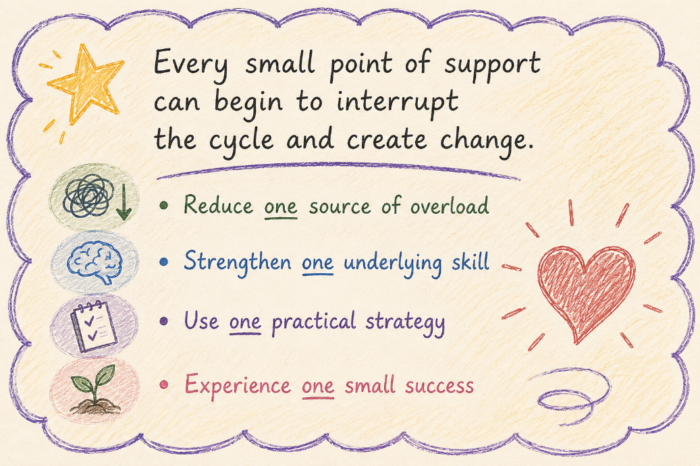
Every small point of intervention matters
Reducing one source of overload, strengthening one underlying skill, finding one practical strategy, or experiencing one small success can begin to change the pattern.
Each step interrupts the cycle.
And every interruption creates a little more space for confidence, learning, and lasting change.
If this resonates with you, feel free to get in touch. I offer personalised support focused on building strong foundations, confidence, and effective learning strategies.
Book here https://katerinalatalova.youcanbook.me/
info@outoftheboxteaching.co.uk
07786 628820